∝
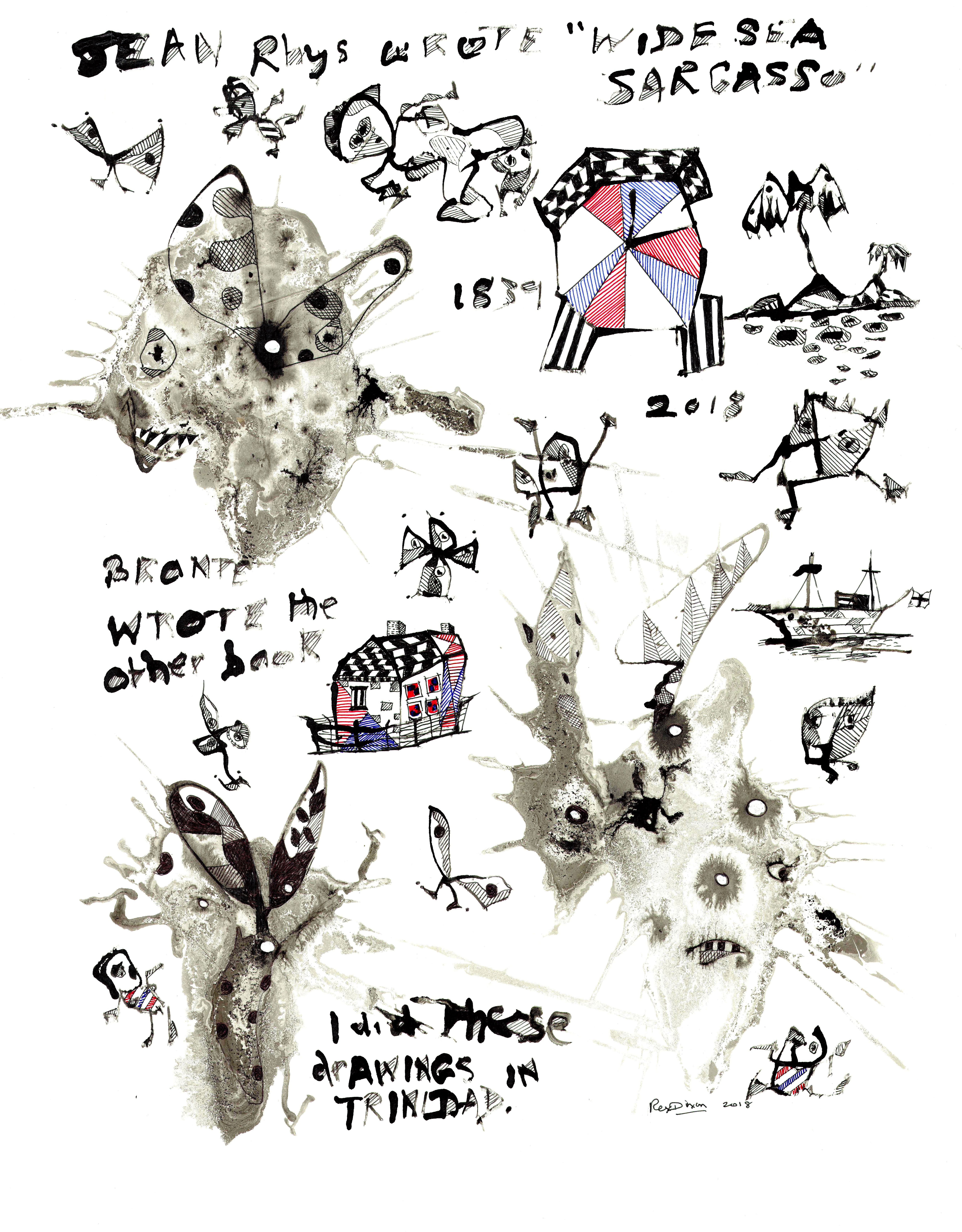
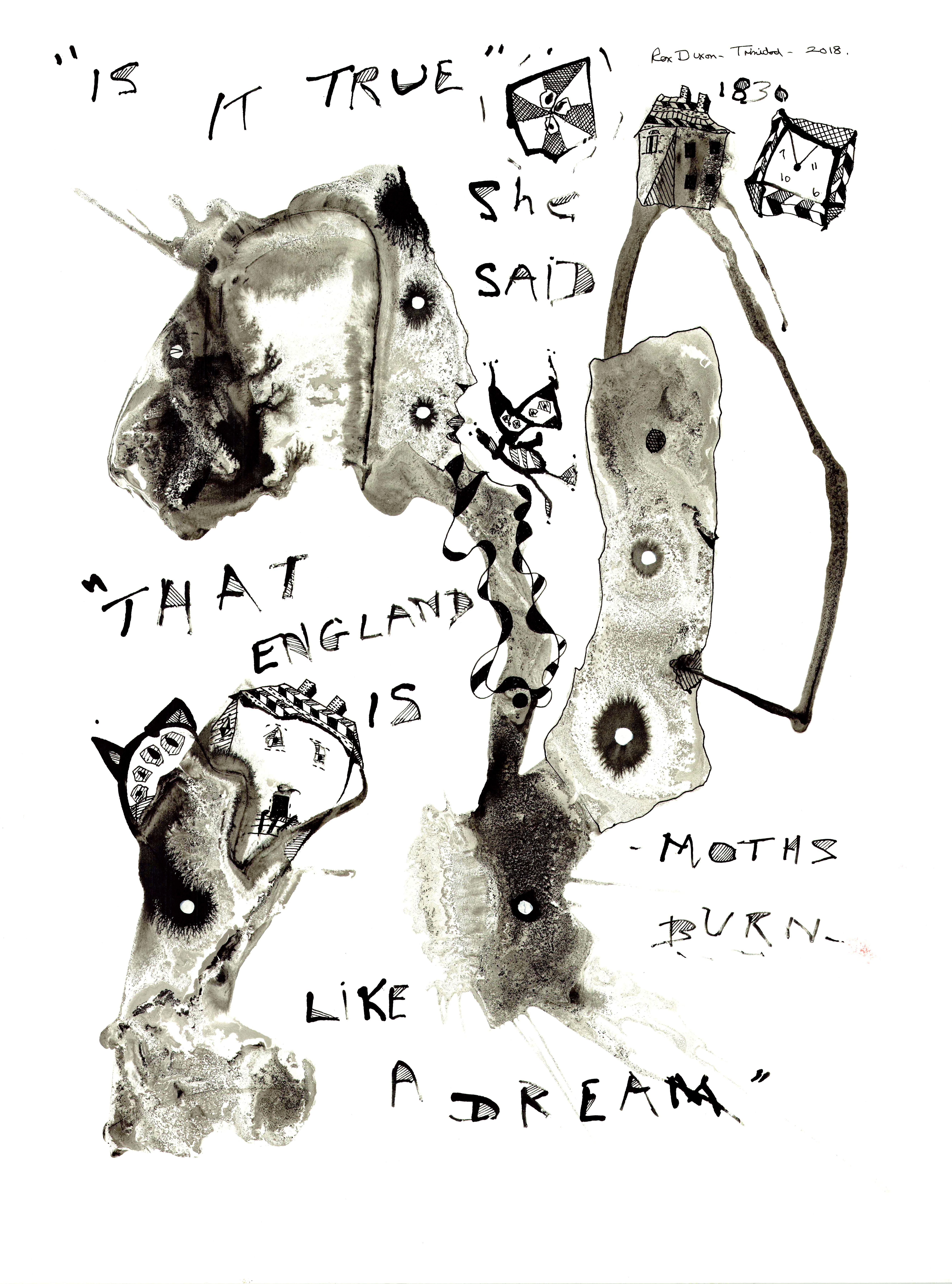
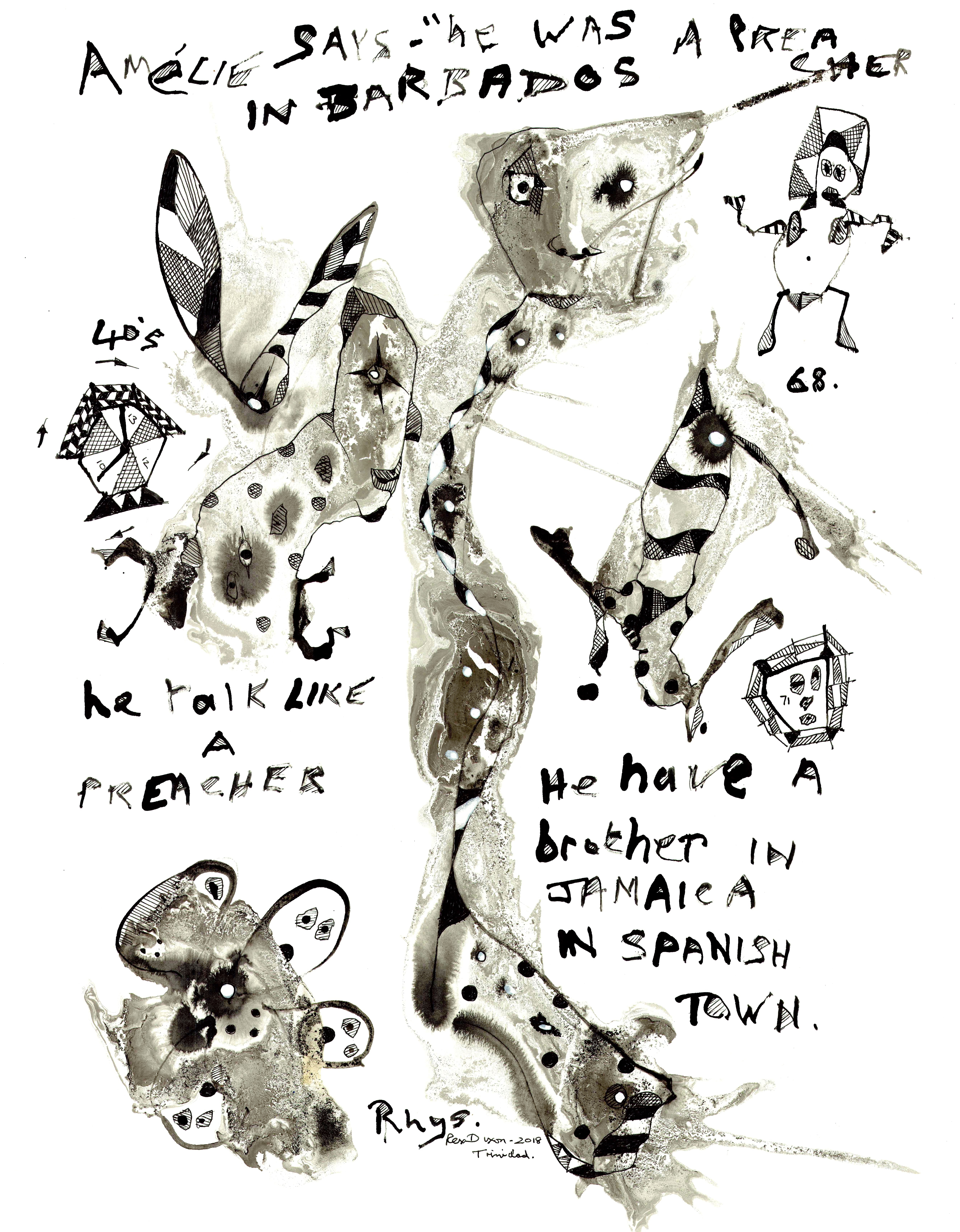
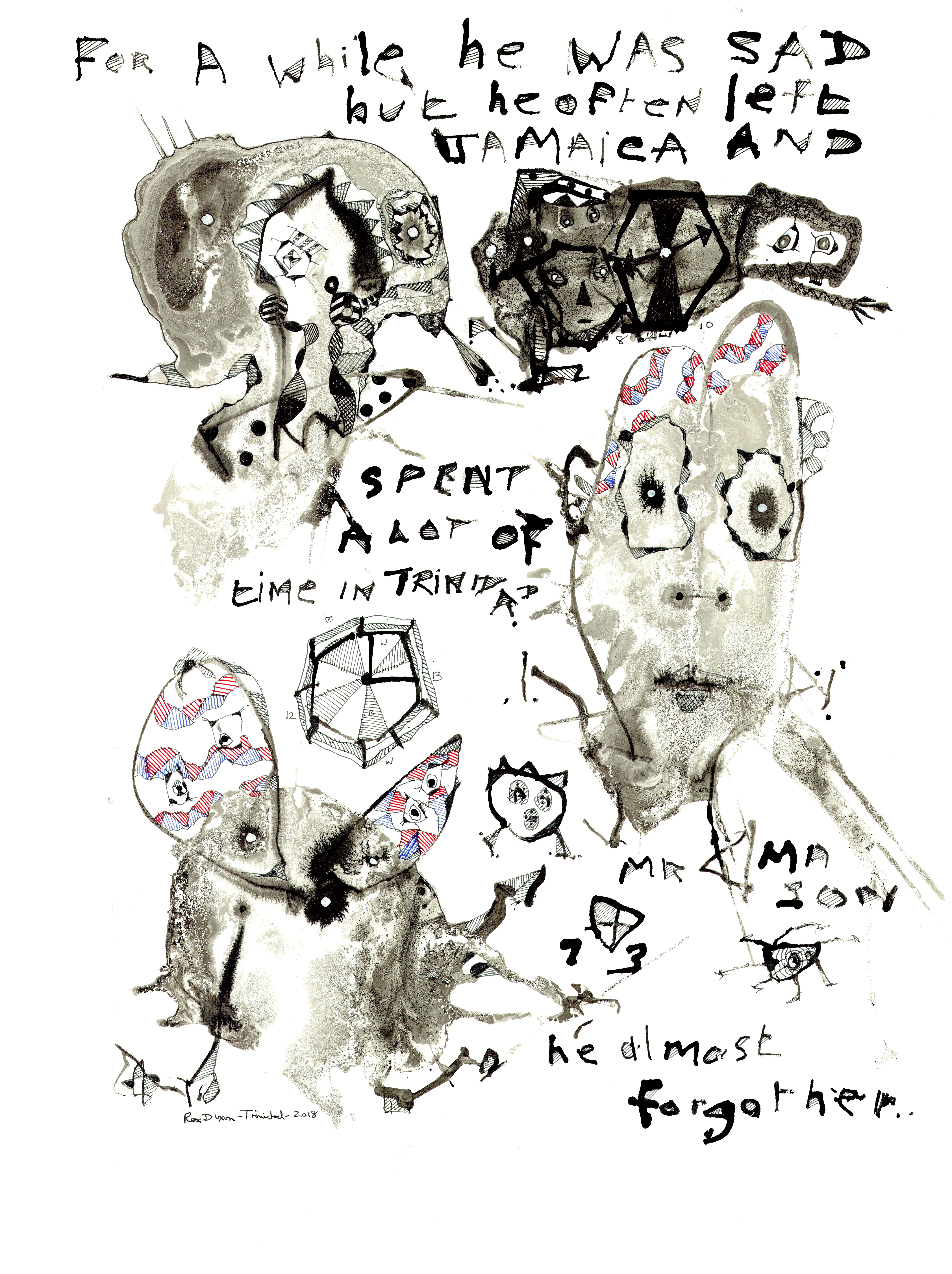
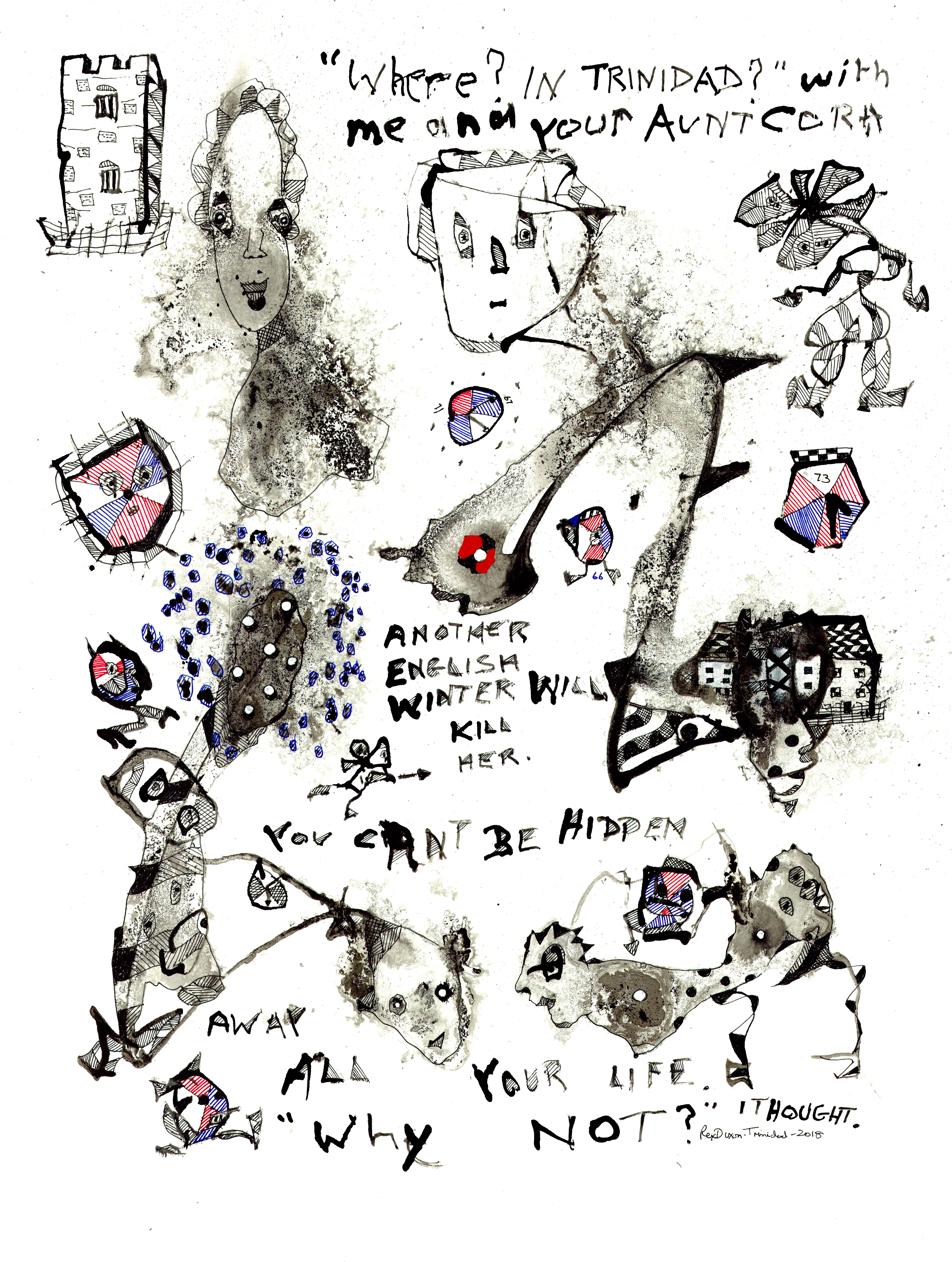
Rex Dixon is a world citizen: an artist who has moved from England to Northern Ireland and to Jamaica and then Trinidad and Tobago, where he has resided for several decades. His paintings are in the permanent collections of the National Gallery of Jamaica, the Caribbean Development Bank, The University of the West Indies and in numerous other private collections. He is represented by the James Wray Gallery in Belfast, Northern Ireland, and Softbox Gallery in Port of Spain, Trinidad, and he has exhibited all over the world, including at the National Museum and Art Gallery, Port of Spain, Trinidad and Tobago. With his wife, the feminist scholar and film-maker Patricia Mohammed, he is the co-author of the hybrid memoir Travels with a Husband (2016). These pieces are taken from Jane Eyre: Caribbean Drawings published in 2019 and available here.
Says Dixon of this project, “What do I have in common with Charlotte Brontë’s character from Yorkshire or the troubled soul of Jean Rhys, the author of the Jane Eyre prequel Wide Sargasso Sea, and the West Indian psyches the latter dissects? Like Brontë’s character Rochester, I had come to a tropical island from England, albeit in the late twentieth century, had married a local girl, and like him I had had my marriage certificate registered in Spanish Town. I remember standing with the Jamaican priest Reverend Ashley Smith all day at the registry office to get the marriage certificate. I imagined Rochester over a hundred years ago, in this place, waiting for the paperwork, just as I had to do.”
“In these drawings, I try to capture the atmosphere of tropical heat after an English winter, the bleakness of the British landscape in the early nineteenth century, and the strangely tempered relationship between Jane and Rochester. Living and working in the Caribbean now for almost four decades, I could identify somewhat with the internal turbulence that Rochester experienced in the fictional encounter with the anachronistic Caribbean, and the exigencies of race confrontations he experienced, against the contained, ostensible orderliness of the 19th century British class system.”
“The character of Rochester I leave to the viewer’s imagination of my drawings, although, to tell you the truth, as I worked through the material from books and films and biographies my reservations about his morals and motivations loomed larger than they did on superficial reading of the books. The Irish would call Mr. Rochester a chancer, someone who would make the best of any opportunity that would crop up in his life. Both Jane Eyre and Wide Sargasso Sea have had a long shelf life, and their authors and the fictional people they have produced, have continued to generate a plethora of academic writing, film productions and biographies about the authors.”
Of Dixon’s uncharacteristically monochromatic ink engagements with Jane Eyre, Mohammed observes, “These images in his mind exist in chiaroscuro – shadows of greys, dark to light, light to dark. In doing this, Dixon synthesizes the ‘architecture’ of painting with the architecture of the novels and is at the gates of abstraction. This is the negation between the narrative and the abstract and a secret passageway to transparency. Each surface drawing defends its authenticity.”